Plug In and Play: The Real Gear Setups UK DJs Are Running in 2024
Every DJ has an opinion on gear. Ask ten of them what you should buy and you'll get eleven different answers. But there's a big gap between what gets reviewed on YouTube and what DJs are actually loading into a gig bag at 11pm on a Friday. We went out and asked real, working UK DJs — residents, festival acts, bedroom producers — exactly what they're using, why they chose it, and what they'd never play without.
The results are messier, more interesting, and a lot more useful than any spec sheet.
The Starter Rig: Making It Work on a Budget
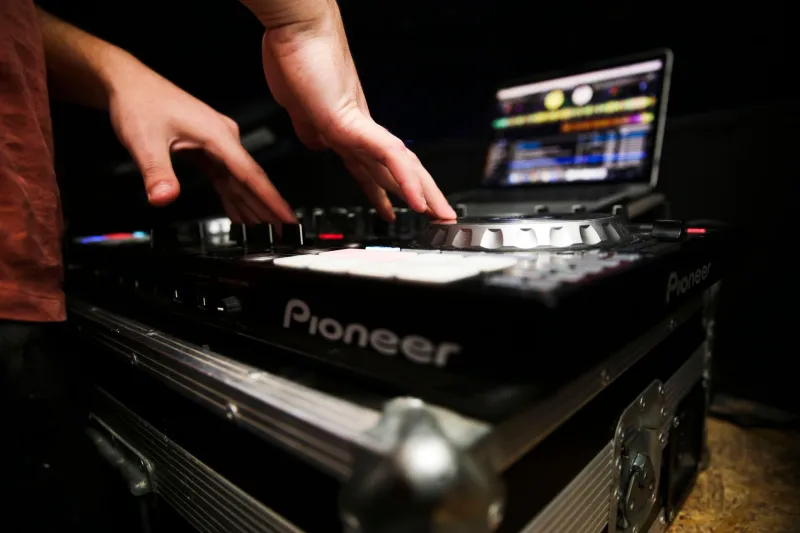
Let's start at the beginning. For most DJs coming up in the UK right now, the first proper setup costs somewhere between £250 and £600. The Pioneer DDJ-400 has been the go-to entry point for years, and it's not hard to see why — it mirrors the layout of a CDJ/DJM setup, integrates seamlessly with Rekordbox, and holds its value well on the second-hand market if you ever want to upgrade.
But the DDJ-400 isn't the only game in town anymore. The Numark Mixtrack Pro FX has picked up a loyal following among DJs who want built-in effects without spending Pioneer money. Meanwhile, the Native Instruments Traktor Kontrol S2 keeps cropping up among DJs with a more leftfield or techno-leaning taste — partly because Traktor's workflow suits a more experimental approach to mixing.
"I started on a DDJ-400 and a battered laptop from CEX," says Kieran, a house DJ based in Bristol who now plays regular nights across the South West. "The gear wasn't the limitation — knowing what to do with it was. Honestly, I could still do a decent set on that rig today."
The message from DJs at this level is consistent: don't obsess over the hardware. Learn it inside out, build your library, and move on when the gigs demand it.
The Mid-Level Setup: Where Most Working DJs Actually Live
Once you're getting paid — even modestly — the setup tends to evolve around the Pioneer DDJ-1000 or its SRT counterpart. This is the controller that genuinely bridges bedroom and booth. It's got the jog wheel feel, the four-channel layout, and the build quality to survive a touring schedule without falling apart.
Pair it with a decent laptop (most working DJs we spoke to are on MacBook Pros, though a well-specced Windows machine running Serato or Rekordbox is absolutely fine), a reliable USB hub, and a proper DJ bag — the Magma CTRL Case range gets mentioned constantly — and you've got a setup that'll hold up in a dark, sweaty venue.
Software splits largely down genre lines. House, techno, and disco DJs tend to gravitate toward Rekordbox. Those coming from a hip-hop, drum & bass, or open-format background often stay loyal to Serato. A small but growing number of more experimental acts are returning to Traktor, particularly with the resurgence of interest in stems mixing.
"Serato is just second nature at this point," says Priya, a drum & bass DJ from Birmingham with a growing festival profile. "I've tried switching twice and always gone back. The cue point workflow is just faster for how I prep."
The Festival Tier: Riders, CDJs, and No Room for Error
At festival level, the gear conversation shifts entirely. You're not bringing your own controller — you're walking into a booth with a Pioneer CDJ-3000 and NXS2 setup, or occasionally a Rane setup at certain US-influenced events. The ability to play on club standard gear without your own hardware isn't optional; it's the baseline.
This is where USB prep becomes everything. DJs playing at this level are typically running Rekordbox in Export mode, with meticulously organised libraries, colour-coded crates, and analysed waveforms. Hot cues are set with intention. Energy levels are tagged. Backup USBs are packed separately from the main ones.
"I have a pre-gig ritual," explains Marcus, a techno DJ from London who plays across European festivals. "Two USBs, both updated the same day. One goes in my jacket pocket, one in the bag. I've seen DJs lose a set because their USB corrupted. That's not happening to me."
A growing number of festival-level DJs are also incorporating hardware into their live setup — Roland TR-8S drum machines, Elektron boxes, or even modular elements that allow them to layer live percussion or synth lines over their mixes. It's a risk, but it's also what separates a DJ set from a DJ performance.
The Underrated Essentials Nobody Talks About
Beyond the headline gear, there's a layer of kit that working DJs swear by but rarely gets coverage. A few that came up repeatedly:
- A quality audio interface for home recording — the Focusrite Scarlett 2i2 is almost universal for recording mixes at home before they go to a podcast or Mixcloud.
- Cable management — sounds boring, but a tidy booth setup signals professionalism and prevents disasters mid-set.
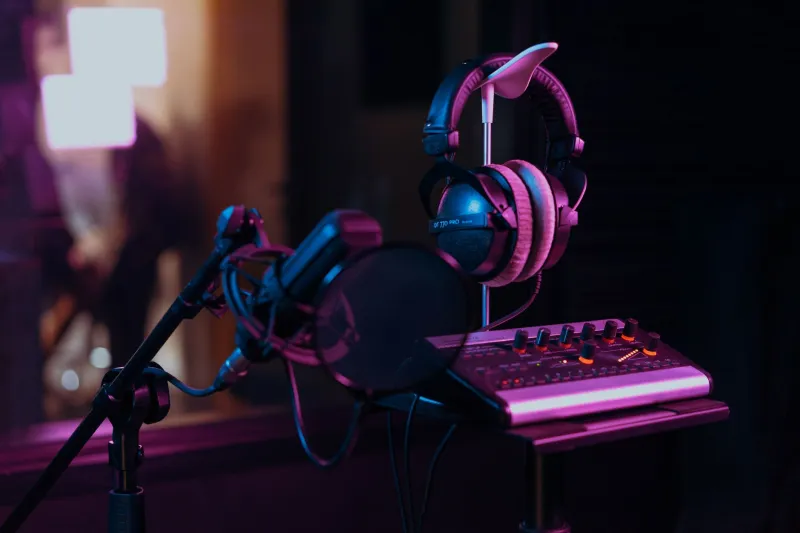
- Good headphones — the Sennheiser HD 25 remains the industry standard for a reason. Durable, accurate, and they stay on your head when things get physical.
- Power strip with surge protection — several DJs mentioned this unprompted. Venues aren't always reliable.
The Software Layer: It's Not Just About Mixing
Hardware is only half the picture. The software stack that surrounds a DJ's workflow — from music discovery to mix prep to promotion — has become just as important as the controller on the table.
Beatport and Bandcamp are the primary sources for new music, with many DJs supplementing these with Traxsource for house and soul, Juno Download for techno and electro, and SoundCloud for unsigned and promo material. A number of DJs we spoke to also use tools like Mixed In Key for harmonic analysis, which feeds directly into how they structure transitions.
For recording and sharing mixes, Audacity remains popular for its simplicity, though Adobe Audition and Logic Pro are used by DJs who want more control over the final sound. Mixcloud continues to dominate for long-form mix content in the UK, with many DJs treating it as a portfolio platform rather than just a streaming service.
The Bottom Line
The gear matters, but not as much as the music selection, the preparation, and the ability to read a room. Every DJ we spoke to said some version of the same thing: the best setup is the one you know so well it disappears. When you stop thinking about which button does what and start thinking only about the music, that's when the real DJing starts.
Build smart, prep obsessively, and never let the tech be the reason a set falls flat.