First On, Last Remembered: Why the Opening DJ Slot Is the Hardest — and Most Underrated — Gig in the Room
Here's an opinion that might ruffle a few feathers: the opening DJ slot is harder than the headline. Not more glamorous. Not better paid. Not more photographed. But harder. And the DJs who've mastered it know something about the craft of performance that most headliners will never have to learn.
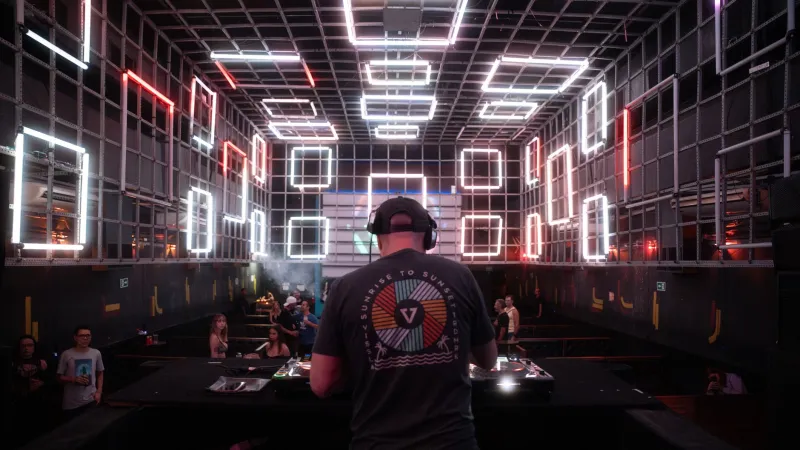
The warm-up is where you play to people who haven't decided to be there yet. The bar queue is still longer than the dancefloor. The lighting rig is half up. The sound engineer is still EQing the room. And you're supposed to make something happen — not too fast, not too much, but enough that when the headliner walks in, they're stepping into a room that's already breathing.
Do it right and nobody notices. Do it wrong and everyone does.
The Cold Room Problem
Every experienced opener will tell you the same thing about walking into a cold room: it's a test of nerve as much as technique. The temptation — especially for younger DJs who've spent months waiting for this opportunity — is to play your best records immediately. To prove yourself. To make something happen by force.
That's almost always the wrong call.
A cold room doesn't need excitement. It needs invitation. The people trickling in at 10pm aren't ready to commit to a dancefloor — they're still orienting themselves, finding their mates, getting their first drink. The DJ's job in these early minutes is to provide a sonic environment that feels right without demanding anything in return. Familiar but not obvious. Interesting but not challenging.
Think of it as setting a temperature rather than starting a fire. You're warming the room up by degrees, not throwing a match at it.
Restraint as a Technique
The best warm-up DJs in the UK club circuit share a quality that's almost counter-intuitive: they play less than they could. They choose tracks that have space in them — slower tempos, more room between elements, music that breathes rather than bludgeons. They resist the urge to drop their weapons early.
This isn't passivity. It's strategy. Every track that would floor a room at midnight, played at 10pm, is a bullet wasted. Worse than wasted — it creates a ceiling. If you play your best record in the first hour, everything that follows feels like a step down. The room's energy has nowhere to go but sideways.
Restraint in the warm-up is about preserving gradient. You want the room to feel, by the time the headliner arrives, that it's been on a journey — that things have been building, that there's momentum and expectation in the air. That's what a good opener hands over: not just a warm crowd, but a crowd that's ready for more.
Reading a Room That Hasn't Arrived Yet
This is the paradox of the opening slot: you have to read a room that doesn't fully exist yet. The people who'll define the night's energy — the ones who'll be front and centre at 1am — might not even be in the building yet. So how do you play to an audience you can't see?
You play to the room's potential rather than its current state. You make decisions based on what you know about the night — the promoter's booking history, the headliner's sound, the demographic the venue attracts — and you build toward that, even if the evidence in front of you is thin.
The DJs who are genuinely gifted at this develop a kind of peripheral awareness. They're watching the bar, the door, the way people move through the space. A cluster of people stopping to listen rather than walking past is a signal. Someone making eye contact from the edge of the dancefloor is a signal. These micro-moments of connection tell you whether the room is ready to be nudged forward.
The Narrative Arc
A great warm-up set has a shape. It has a beginning that's almost ambient in its approachability, a middle section where tempo and energy slowly tighten, and an end — the handover to the headliner — that's arrived at naturally rather than abruptly.
Think about it like the first act of a film. You're not supposed to resolve anything. You're supposed to introduce the world, establish the tone, and create enough intrigue that the audience is invested in what comes next. The headliner is the second act. Your job is to make them want to stay for it.
DJs who understand this narrative structure approach track selection differently. They're thinking about momentum and pacing rather than individual peak moments. A track might not be their personal favourite, but if it moves the room one step further along the journey, it earns its place in the set.
Why Openers Get Overlooked — and Why That's Changing
Historically, the opening slot has been treated as the throwaway position — the gig you give to a mate, the new act you're trying out, the obligation rather than the opportunity. That attitude is shifting, partly because some of the UK's most respected selectors built their reputations specifically through warm-up work.
Promoters who care about the full arc of a night — and the good ones always do — have started recognising that a bad opener can poison a room that a headliner then spends an hour trying to recover. The warm-up isn't separate from the night's success. It's foundational to it.
For DJs looking to build a reputation, this represents a genuine opportunity. Position yourself as someone who understands and excels at the opening slot, and you become valuable in a way that pure headline ambition doesn't make you. You become the person promoters trust with their room before it's ready — which, in the long run, is exactly how you earn the right to headline it.
The first voice of the night doesn't get the headline billing. But it sets everything in motion. And in a room that's listening — really listening — that's remembered long after the last record plays.